Travel guide
Trincomalee Facts: Numbers, History and Geography That Matter
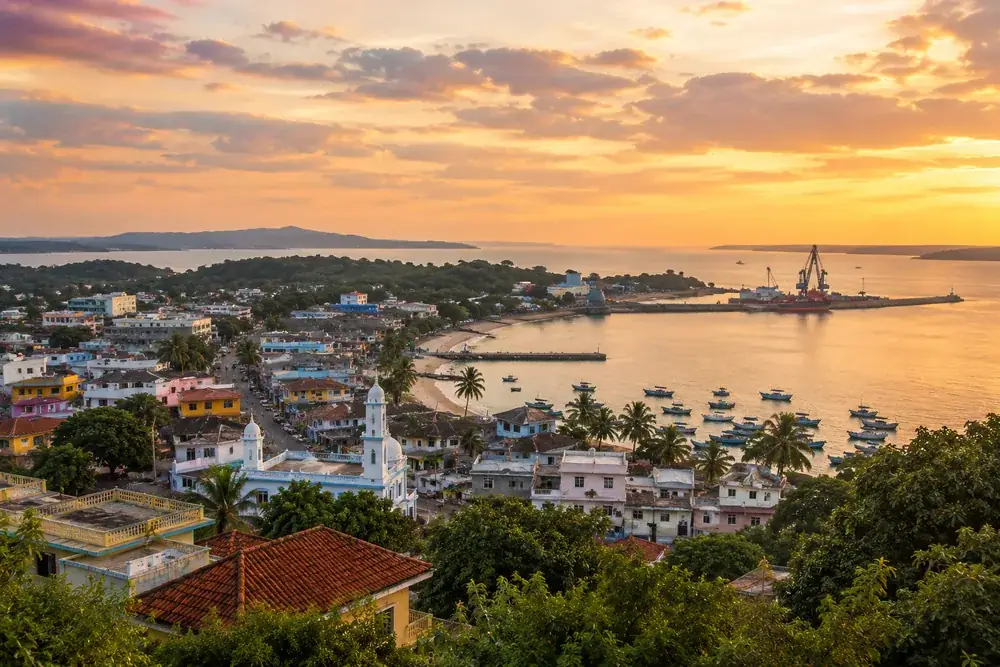
Trincomalee is the administrative capital of Trincomalee District in Sri Lanka's Eastern Province: a city of 99,135 people (2012 census) built on a peninsula that divides one of the largest natural harbors on earth. It has been a working seaport since around 400 BCE.
This page collects the verified numbers and facts behind the destination, the kind of detail that helps you understand what you are actually visiting. Figures are drawn from census data, 1991 to 2020 climate normals and documented history, last checked July 2026.
The city in numbers
Population 99,135 at the 2012 census, packed into about 7.5 square kilometers of peninsula at an elevation of just 8 meters, which makes it one of Sri Lanka's denser towns. It is the headquarters of Trincomalee District in the Eastern Province, and locals answer to the demonym Trincomalians. The town sits at roughly 8.57 degrees north, 81.23 degrees east, on the island's east coast.
The name is an anglicized form of the Tamil Thiru-kona-malai, usually rendered as Lord of the Sacred Hill, first recorded in that form in 7th century Tevaram hymns. The city has been a center of Sri Lankan Tamil culture for close to a millennium, and its harbor bay carried the Sanskrit name Gokarna, Cow's Ear, in ancient texts.
The harbor: why Trincomalee exists
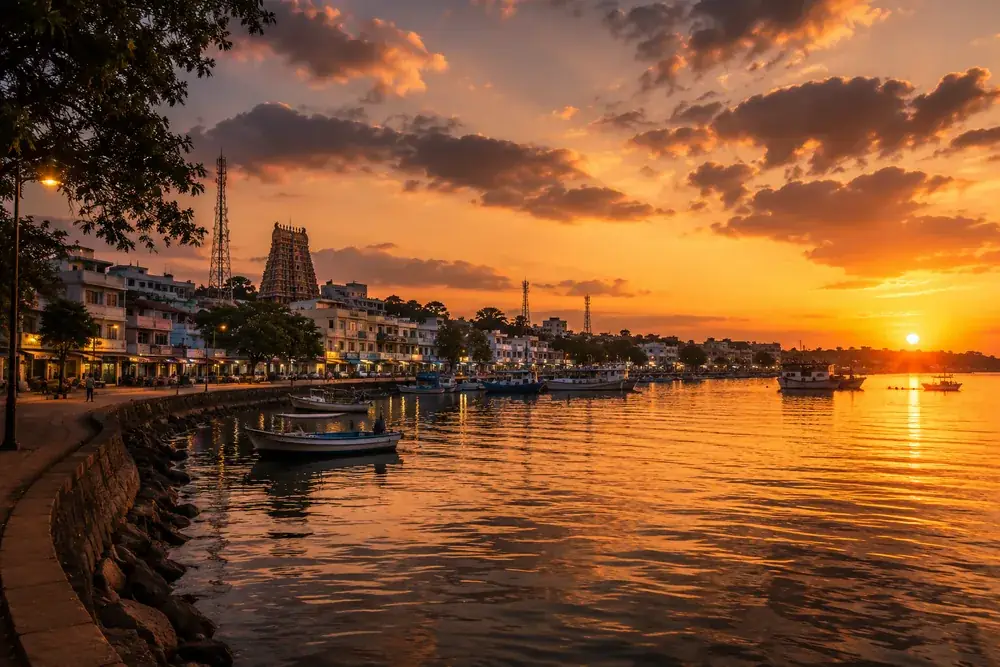
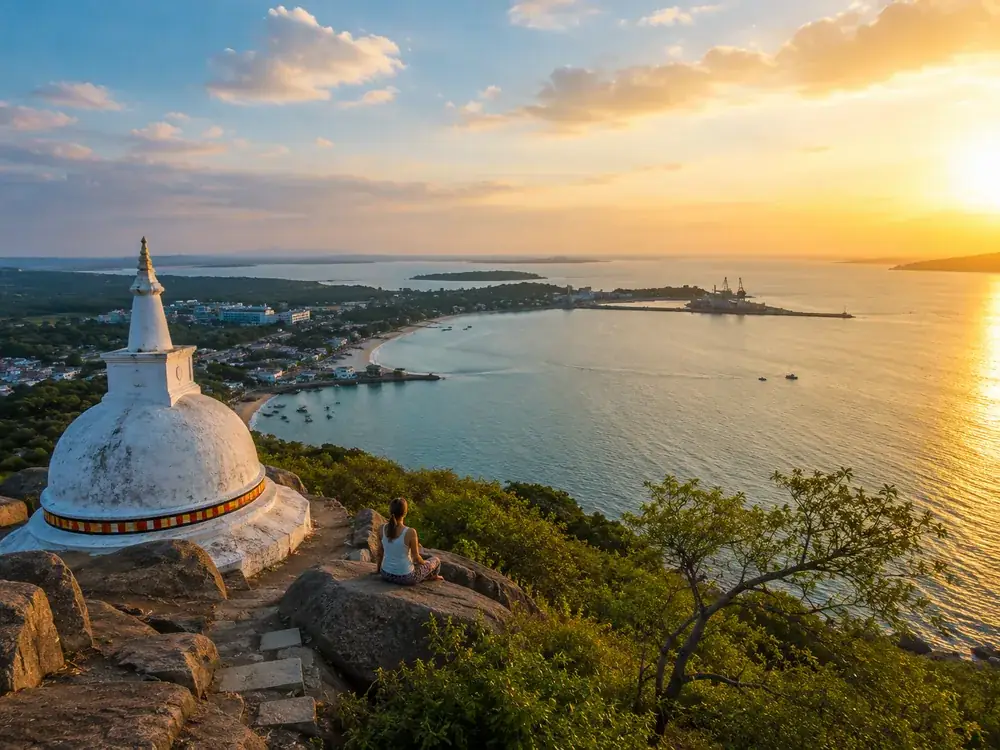
Trincomalee Harbour is the fifth largest natural harbor in the world, a deep circular bay guarded by two headlands and accessible to any vessel in any weather, which is rare in the Indian Ocean. Admiral Horatio Nelson called it the finest harbour in the world, and the European powers took the point seriously: Portuguese, Danish, Dutch, French and British forces all held Trincomalee at some stage, with the British taking final control in 1795.
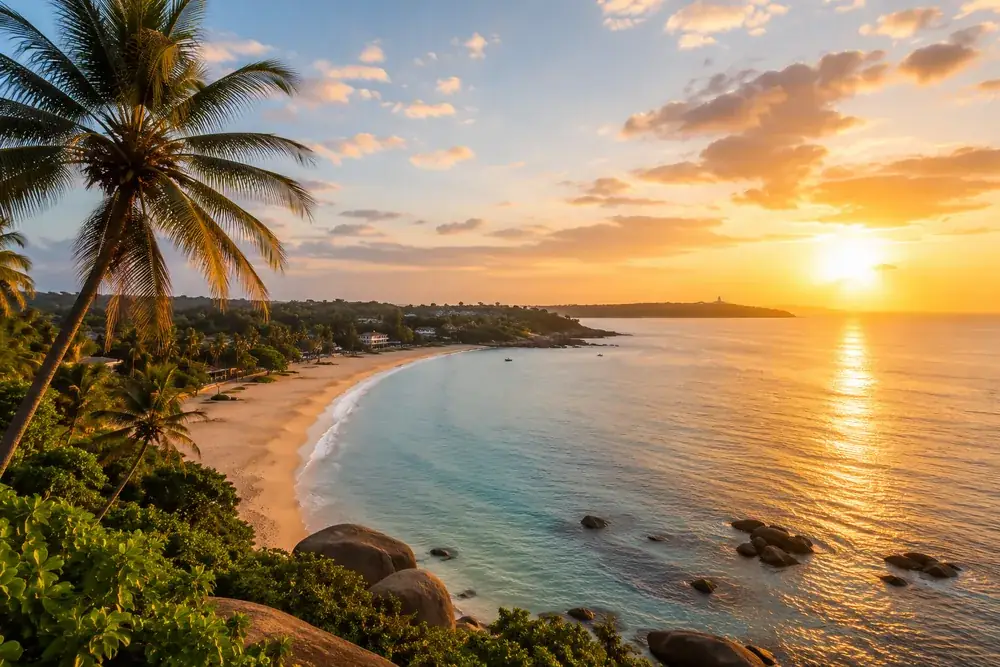
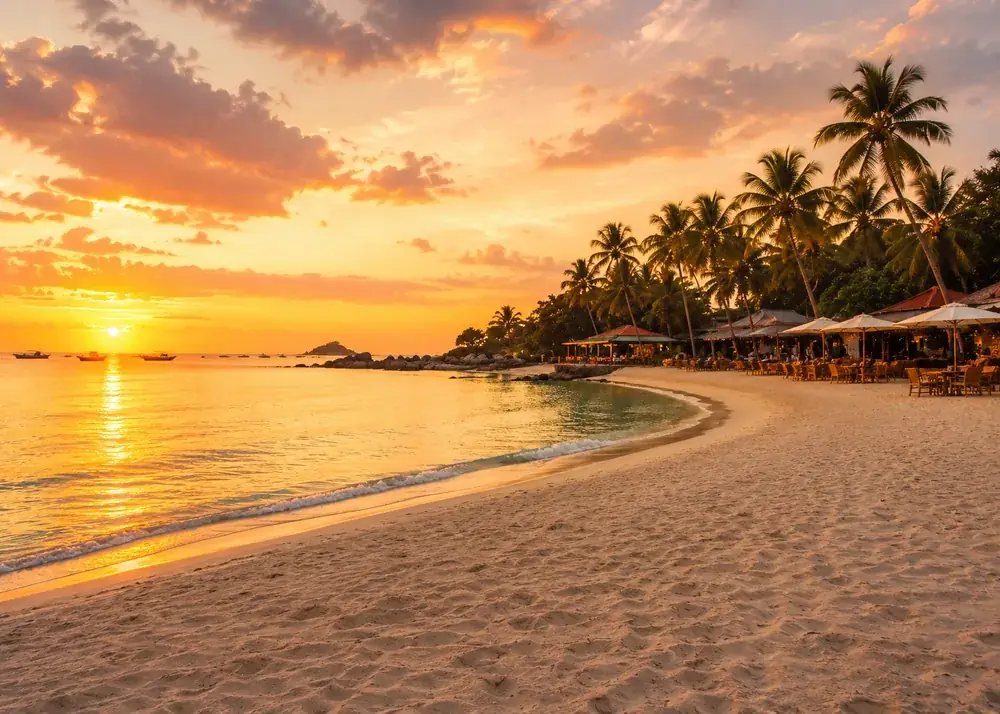
The harbor still shapes the town. Sri Lanka's navy and air force maintain major bases here, China Bay hosts the air force academy, and a 2015 agreement set India and Sri Lanka developing the World War II era oil tank farm at China Bay into South Asia's largest depot. For travelers, the practical legacy is simpler: the harbor's sheltering geography is why Marble Beach and Dutch Bay have such calm water.
A 2,400 year timeline, briefly
A seaport since about 400 BCE, Trincomalee grew around the Koneswaram temple on Swami Rock, a shrine with recorded history from the 3rd century BCE that drew pilgrims from across India and was so famous the Portuguese called it the Rome of the Orient. In 1622 the Portuguese demolished the temple and used its stones to fortify the headland; the fort at its entrance dates to 1623, and the Dutch built the present Fort Fredrick in 1660.
The city changed hands repeatedly, including a French interlude after the 1782 Battle of Trincomalee during the American Revolutionary War, before the British took it in 1795 and held it until independence in 1948. In April 1942 Japanese carrier aircraft attacked the harbor and airfield in the Indian Ocean Raid of World War II; Trincomalee then served as home port to the Royal Navy's Eastern Fleet. Sri Lanka took over the naval and air bases in 1957. In 1950, 10th century bronze statues of Shiva from the original shrine were found buried near the promontory, and restored shrines reopened in 1963.
Climate, with real numbers
Trincomalee has a tropical wet and dry climate with around 1,609 millimeters of rain a year, but the distribution is the story: June averages only about 26 millimeters while November averages about 376. The dry season runs April through August, and the driest, sunniest stretch overlaps exactly with the calm-sea beach season from May to September.
Daytime highs run from about 29 degrees Celsius in December and January to about 35 degrees from May through August, with sea-level humidity lowest in the dry months. The city averages 7.8 hours of sunshine a day across the year, peaking above 9 hours in February and March. In short: the numbers confirm what the guides say, and a beach trip belongs in May to September.
Geography for travelers
Swami Rock, the cliff under Koneswaram Temple, drops 400 feet, about 120 meters, straight into the sea; the cleft in the rock is tied to the Ramayana's King Ravana in local tradition. The sea off Trincomalee's beaches is unusually shallow, in places letting you walk out more than a hundred meters before the water reaches your chest, which is exactly why the swimming is so good. Kanniya's seven hot springs sit just off the road out of town, each spring walled into its own small well.
The city anchors three national highways, the A6, A12 and A15, and the railway line from Colombo Fort terminates at Trincomalee station near the northern beaches. Marble Beach lies 16 kilometers south inside the harbor's shelter, and the whale watching boats that work these waters report sightings rising with tourism. One literary footnote: Arthur C. Clarke dived the submerged temple ruins off Swami Rock and wrote about them before writing 2001: A Space Odyssey.
Quick answers
What is the population of Trincomalee?
99,135 at the 2012 census, within an urban area of about 7.5 square kilometers on the Trincomalee peninsula.
How big is Trincomalee harbor?
It is the fifth largest natural harbor in the world, a deep circular bay accessible to all vessels in all weathers, guarded by two headlands.
How much rain does Trincomalee get?
About 1,609 mm a year, but very unevenly: June averages around 26 mm while November averages around 376 mm. The dry season runs April through August.
How old is Trincomalee?
It has been a seaport since about 400 BCE, and the Koneswaram temple on Swami Rock has recorded history from the 3rd century BCE.
Independent guide content, last reviewed July 2026. No hotel names, ratings or prices are listed until verified listings exist.
Related guides
Trincomalee Travel Guide
The complete independent Trincomalee travel guide: what the town is, the beaches from Marble Beach to Kuchchaveli, Koneswaram Temple, seasons and planning.
Read GuideBest Time to Visit Trincomalee
When to visit Trincomalee: the May to September season month by month, the northeast monsoon, and how the east coast differs from the south.
Read GuideThings to Do in Trincomalee
What to do in Trincomalee: Pigeon Island snorkeling, Koneswaram Temple, Fort Frederick, Kanniya hot springs, whale watching, Marble Beach and the town itself.
Read GuideThe Best Beaches in Trincomalee, Compared Honestly
Every Trincomalee beach compared: Nilaveli, Uppuveli, Marble Beach, Dutch Bay and Kuchchaveli.
Read GuideHotel Directory Coming Soon
We are building an independent hotel directory for Trincomalee. Hotel owners can register early interest now.